ANTEA FINALMENTE TI HO TROVATA!
Antea, a portrait by the Italian Renaissance painter Parmigianino, survived the Second World War: taken, hidden in a salt mine, recovered, and returned to Italy through the postwar restitution of looted artworks led by Rodolfo Siviero. The painting is now held at the Museo di Capodimonte in Naples.
The title of the series comes from this moment of recognition: the encounter with an image once lost, recovered, and returned.
From that encounter, Burns began reworking paintings by Parmigianino, Luca Giordano, Dirk Hendricksz, and William-Adolphe Bouguereau. She subjects these inherited images to glitches, transparency layers, colour channels, and obsolete interfaces, allowing bodies once fixed in oil to reappear through pixels and error.
The works do not treat digital erosion as a style, but as a further historical event on the surface of the image. Each painting has already passed through systems of preservation, reproduction, restoration, circulation, and desire. The screen is the latest site of contact.
Antea, finalmente ti ho trovata asks what remains of an image after centuries of looking, damage, recovery, and transmission.
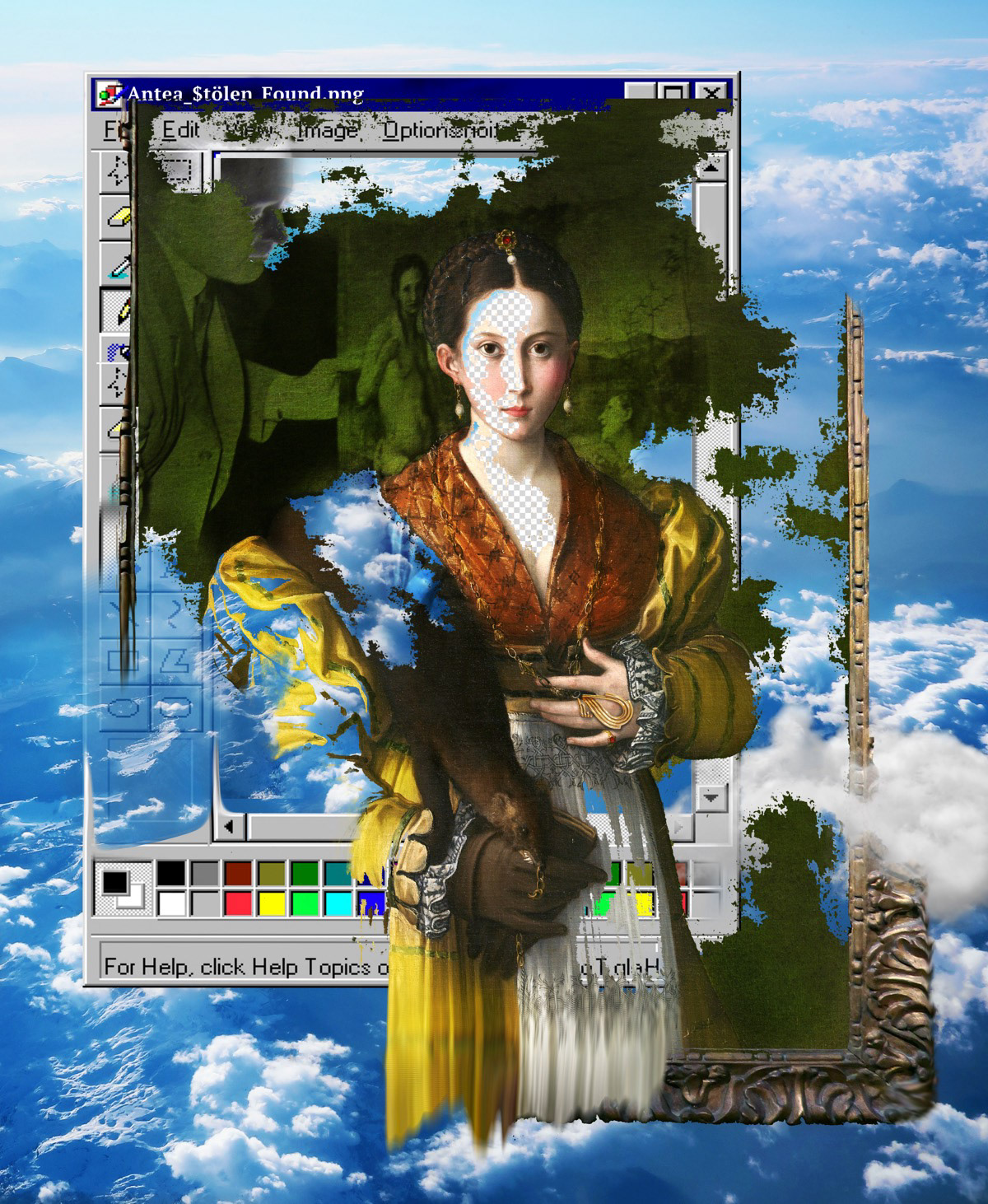
Antea Finalmente Ti Ho Trovata, 2021
Photographic collageAfter Parmigianino, "Antea" (c. 1535), Museo di Capodimonte, Naples.
Photographic collageAfter Parmigianino, "Antea" (c. 1535), Museo di Capodimonte, Naples.
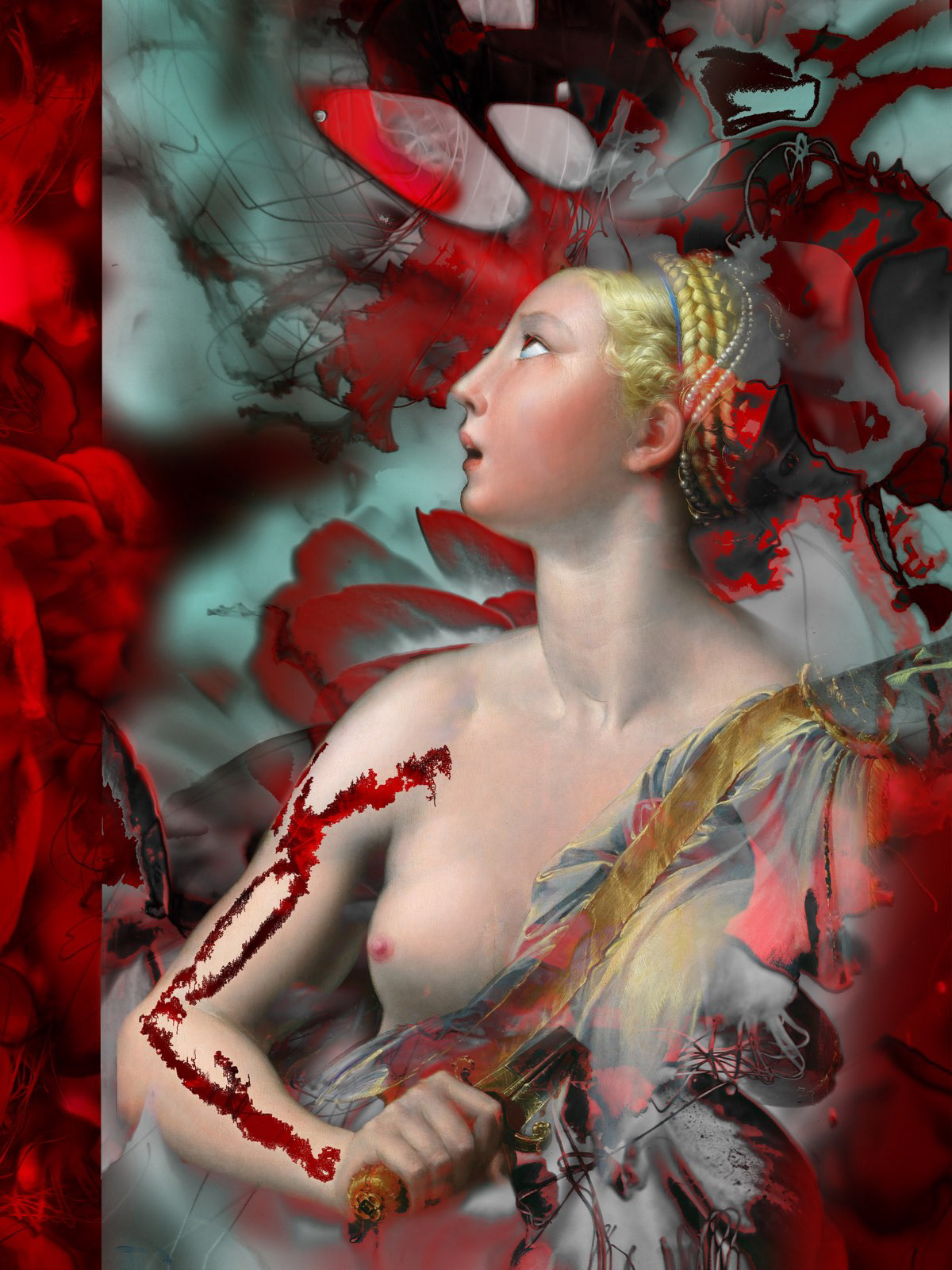
Lucrezia, 2021
Photographic collage
After Parmigianino, "Lucrezia" (1540).
Photographic collage
After Parmigianino, "Lucrezia" (1540).
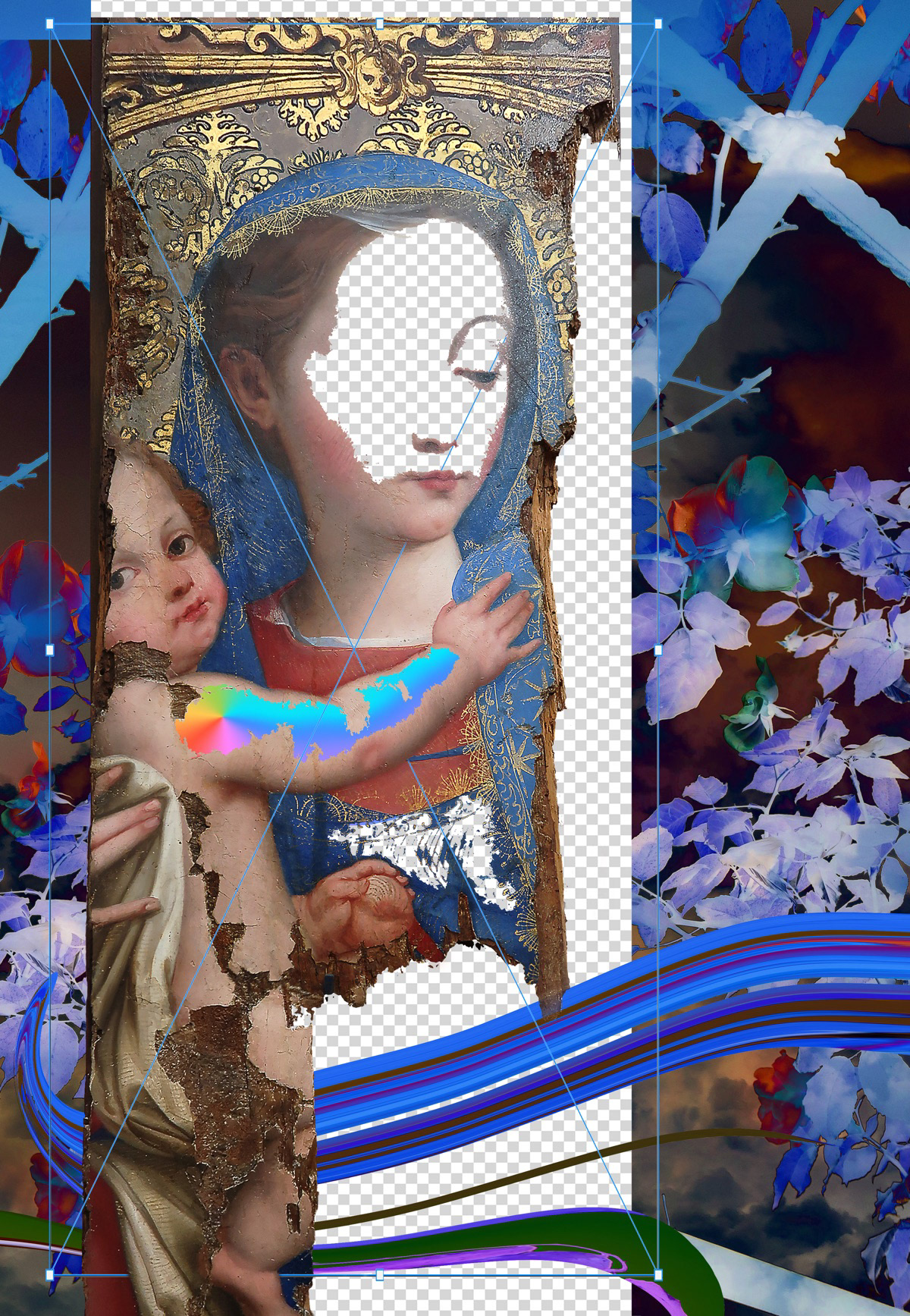
Gamut, 2021
Photographic collage
After Dirk Hendricksz, called Teodoro d'Errico, "Madonna della Purità" (c. 1574–1606).
Photographic collage
After Dirk Hendricksz, called Teodoro d'Errico, "Madonna della Purità" (c. 1574–1606).
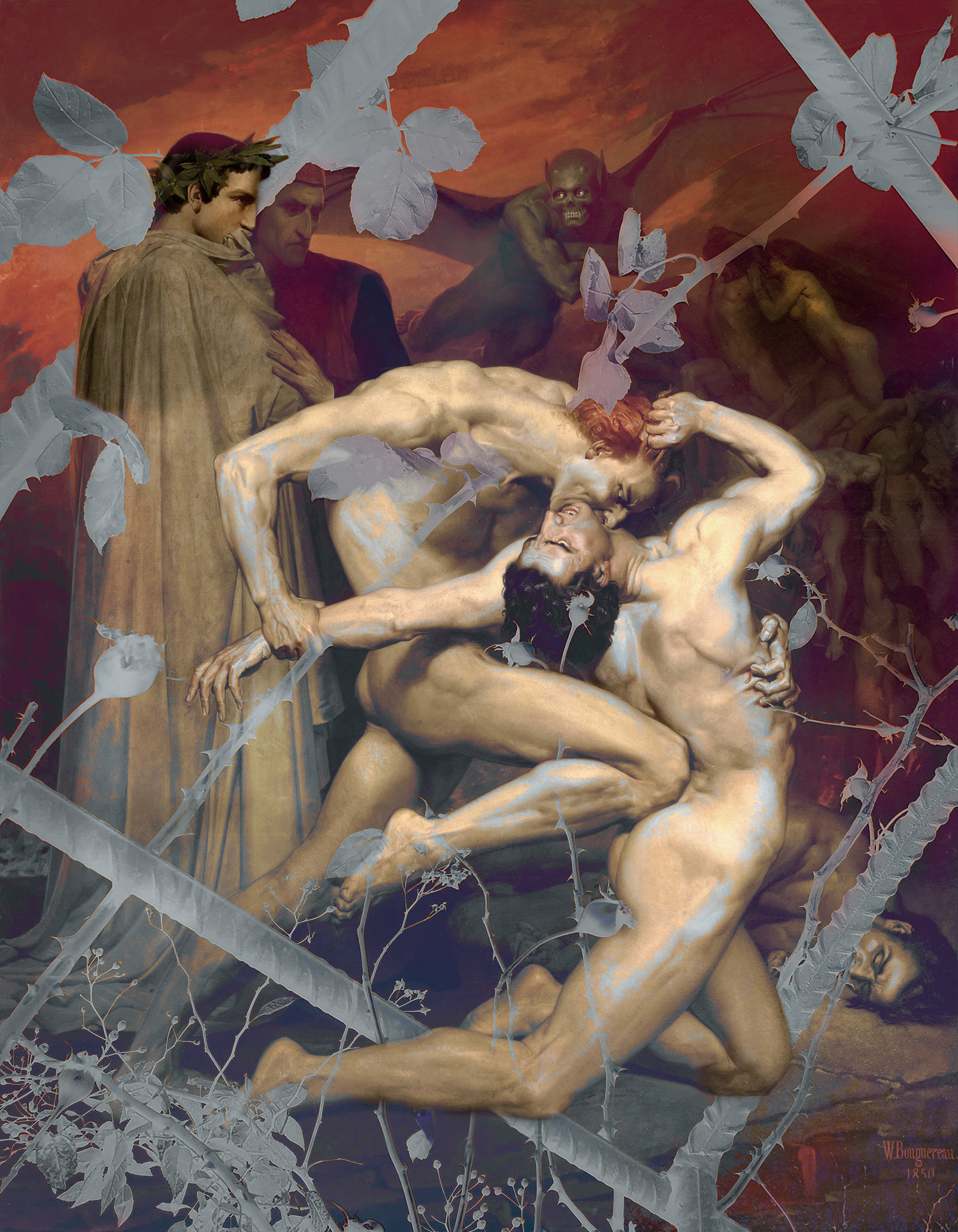
Inferno, 2026
Photographic collage
After William-Adolphe Bouguereau, "Dante and Virgil in Hell" (1850).
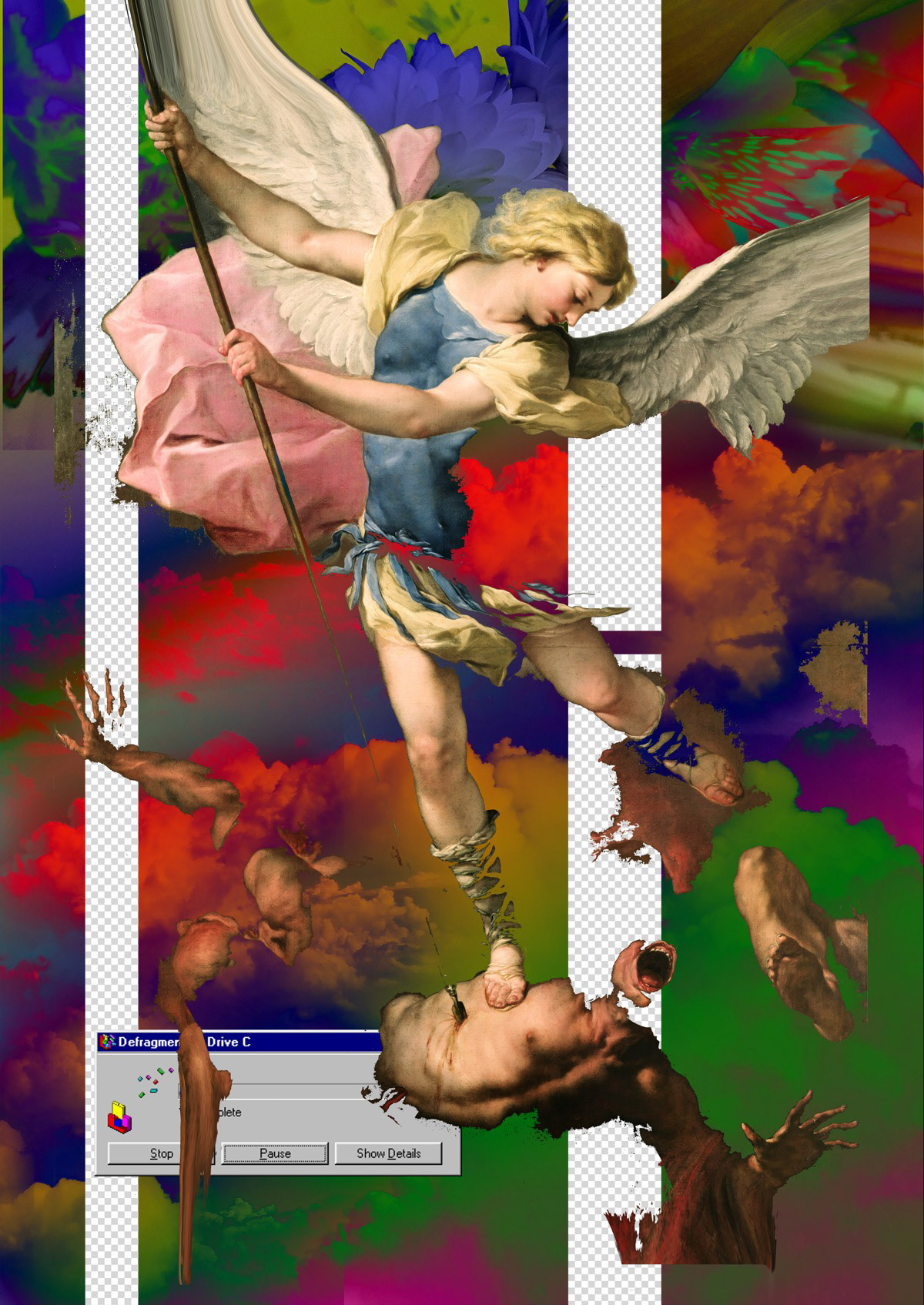
Sancte Michael Archangele, Defende Nos in Proelio, 2021
Photographic collage
After Luca Giordano, "St Michael the Archangel" (c. 1663).
Photographic collage
After Luca Giordano, "St Michael the Archangel" (c. 1663).